Linea Nigra During Pregnancy: Causes, Symptoms, and When It Fades
During pregnancy, many women notice changes in their skin—from stretch marks to darkened areas. One common and completely normal change is linea nigra, a dark line that appears on the abdomen. While it may come as a surprise, linea nigra is harmless and usually fades after childbirth.
This article explains what linea nigra is, why it happens, when it appears, and how to care for your skin during pregnancy.
What Is Linea Nigra?
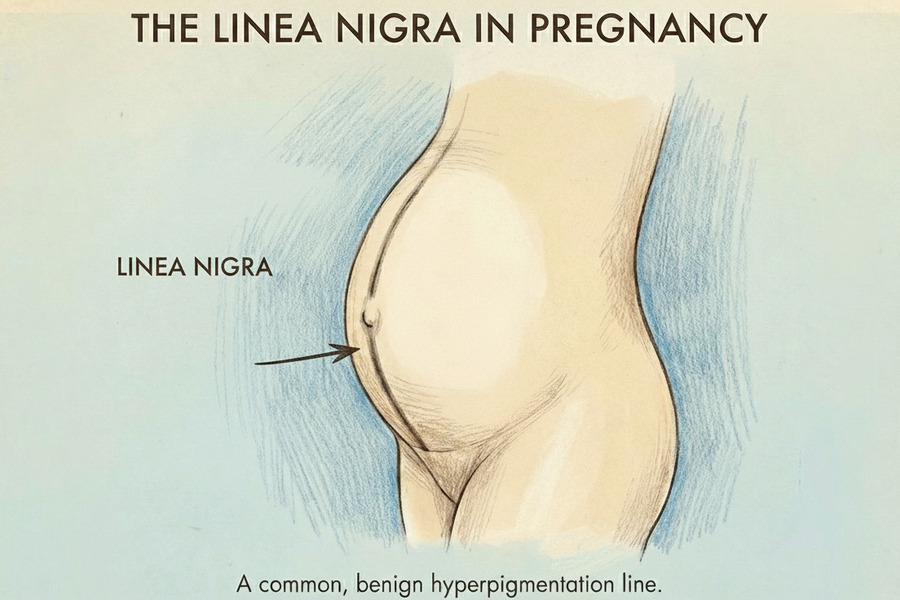
Linea nigra is a dark vertical line that appears on the abdomen during pregnancy. It typically runs from the belly button to the pubic bone, and in some cases, from the ribcage down to the pubic area.
The name comes from Latin:
Linea = line
Nigra = black
In reality, the line may appear brown, dark brown, or black, depending on skin tone.
Why Does Linea Nigra Appear?
Linea nigra develops due to hormonal changes during pregnancy. Increased levels of estrogen and progesterone stimulate melanin production—the pigment responsible for skin color.
These hormones cause the naturally faint line on the abdomen, called the linea alba, to darken and become visible.
When Does Linea Nigra Appear?
Usually appears in the second trimester (around 14–20 weeks)
Becomes more noticeable as pregnancy progresses
May darken further with sun exposure
Not all pregnant women develop linea nigra, and its visibility varies widely.
Who Is More Likely to Get Linea Nigra?
Linea nigra is more noticeable in women who:
Have darker skin tones
Have a history of hyperpigmentation
Are carrying multiples
Experience strong hormonal changes
However, it can appear in women of all skin tones.
Is Linea Nigra Harmful?
No. Linea nigra is completely harmless and does not affect the baby or pregnancy. It is a cosmetic change only and does not indicate any medical problem.
Can Linea Nigra Be Prevented?
There is no guaranteed way to prevent linea nigra because it is hormonally driven. However, certain habits may reduce its intensity:
Limiting sun exposure
Using pregnancy-safe sunscreen
Wearing protective clothing
Maintaining healthy skin hydration
Skin-lightening treatments are not recommended during pregnancy.
Does Linea Nigra Go Away After Pregnancy?
Yes. In most cases, linea nigra fades gradually after childbirth as hormone levels return to normal.
May begin fading within a few months postpartum
Can take up to 6–12 months to disappear completely
Some women may retain a faint line permanently
Common Myths About Linea Nigra
Myth 1: The line predicts baby’s gender
There is no scientific evidence linking linea nigra to fetal sex.
Myth 2: It means something is wrong
Linea nigra is a normal skin change, not a warning sign.
Myth 3: Scrubbing or creams will remove it
Aggressive treatments can irritate the skin and are unsafe during pregnancy.
How to Care for Your Skin During Pregnancy
While linea nigra doesn’t require treatment, general skin care can help keep your skin healthy:
Use gentle, fragrance-free moisturizers
Stay hydrated
Avoid harsh exfoliants
Protect skin from excessive sun exposure
When to See a Doctor
Linea nigra does not require medical attention. However, contact your healthcare provider if you notice:
Sudden or extreme skin darkening in unusual areas
Itching, pain, or rash around the line
Other skin changes that concern you
These may indicate unrelated skin conditions that need evaluation.
Final Thoughts
Linea nigra is a natural and temporary skin change experienced by many women during pregnancy. While it may affect appearance, it poses no risk to your health or your baby’s development. Understanding why it occurs can help you feel reassured and confident as your body changes to support pregnancy.
Every pregnancy brings unique changes—linea nigra is simply one of the many signs of the incredible work your body is doing.