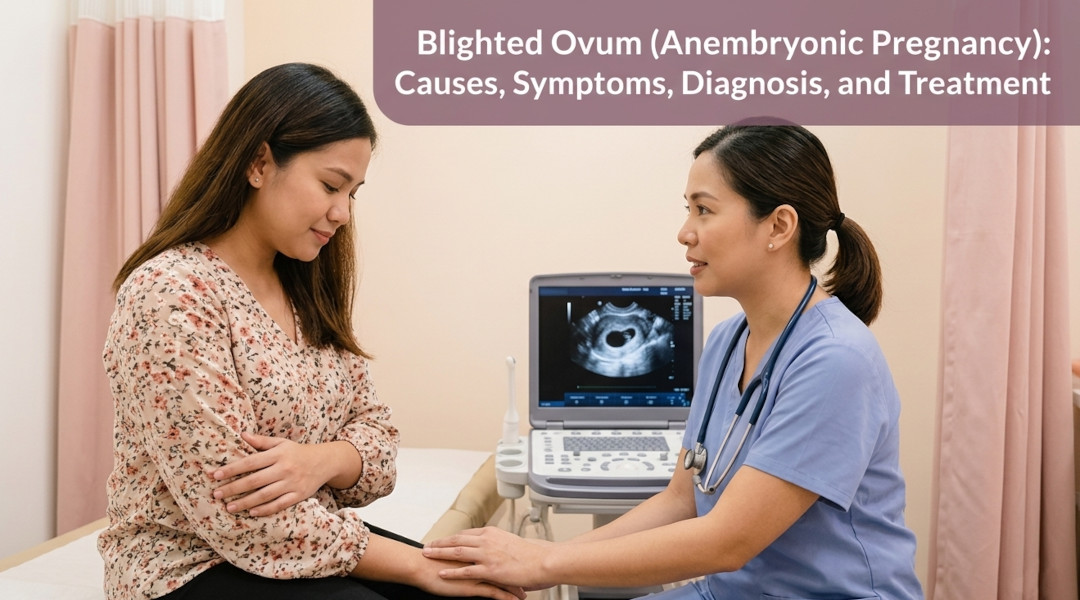
Blighted Ovum (Anembryonic Pregnancy): Symptoms, Causes, Diagnosis, and Treatment
Discovering that you are pregnant is often a joyful and exciting moment. However, not all pregnancies develop as expected. One of the most common causes of early pregnancy loss is a condition known as a blighted ovum, also called an anembryonic pregnancy.
Receiving this diagnosis can be emotionally difficult, especially after a positive pregnancy test and early pregnancy symptoms. Understanding what a blighted ovum is, why it happens, and what treatment options are available can help patients navigate this challenging experience with greater clarity and support.
What Is a Blighted Ovum?
A blighted ovum, or anembryonic pregnancy, occurs when a fertilized egg implants in the uterus, and a gestational sac develops, but the embryo either fails to develop or stops developing at a very early stage.
Although the pregnancy sac continues to grow initially and pregnancy hormones may still be produced, there is no viable embryo inside the gestational sac.
A blighted ovum is considered a type of early pregnancy loss and is one of the most common causes of miscarriage during the first trimester.
How Common Is a Blighted Ovum?
Blighted ovums account for a significant proportion of first-trimester miscarriages.
Many cases occur before a woman even realizes she is pregnant. Others are diagnosed during an early ultrasound examination after a positive pregnancy test.
What Causes a Blighted Ovum?
In most cases, a blighted ovum occurs because of chromosomal abnormalities in the fertilized egg.
These genetic abnormalities prevent normal embryonic development and are usually random events that cannot be predicted or prevented.
Common causes may include:
Chromosomal Abnormalities
The embryo may receive an incorrect number of chromosomes during fertilization, preventing healthy growth.
Poor Egg or Sperm Quality
Occasionally, abnormalities in the egg or sperm may contribute to developmental problems.
Random Cell Division Errors
Mistakes during early cell division can stop embryonic development.
Importantly, a blighted ovum is generally not caused by stress, exercise, sexual activity, travel, or normal daily activities.
What Happens During a Blighted Ovum?
In a normal pregnancy:
- The fertilized egg implants in the uterus.
- A gestational sac forms.
- An embryo develops within the sac.
- A fetal heartbeat eventually becomes visible on ultrasound.
In an anembryonic pregnancy:
- The gestational sac forms normally.
- Pregnancy hormones continue to rise initially.
- The embryo fails to develop or stops developing very early.
- The sac remains empty on ultrasound.
Symptoms of a Blighted Ovum
Many women initially experience typical pregnancy symptoms because pregnancy hormones continue to be produced.
Early symptoms may include:
- Missed menstrual period
- Positive pregnancy test
- Breast tenderness
- Nausea or morning sickness
- Fatigue
As the pregnancy stops developing, symptoms may change.
Signs of Pregnancy Loss
Some women may experience:
- Vaginal bleeding
- Spotting
- Abdominal cramping
- Pelvic discomfort
- Passage of tissue
However, some women have no symptoms at all and only learn about the condition during a routine ultrasound.
How Is a Blighted Ovum Diagnosed?
Ultrasound Examination
Ultrasound is the primary method used to diagnose an anembryonic pregnancy.
A healthcare provider may observe:
- An empty gestational sac
- No visible embryo
- No fetal heartbeat
Because pregnancy dating can sometimes be inaccurate, a repeat ultrasound may be recommended after one to two weeks to confirm the diagnosis.
Blood Tests
Serial pregnancy hormone (hCG) levels may be measured.
In a normal pregnancy, hCG levels generally rise predictably. In a blighted ovum, hormone levels may rise more slowly or eventually begin to decline.
Can a Blighted Ovum Be Mistaken for a Normal Early Pregnancy?
Yes. If an ultrasound is performed very early, it may be too soon to visualize an embryo.
For this reason, OB-GYN specialists often recommend a follow-up ultrasound before making a definitive diagnosis.
This helps avoid diagnosing a viable pregnancy incorrectly.
Treatment Options
Once a blighted ovum is confirmed, several treatment options may be discussed.
Expectant Management (Natural Miscarriage)
Some women choose to wait for the body to naturally pass the pregnancy tissue.
Advantages:
- No medications or procedures required
- Natural completion of the miscarriage process
Disadvantages:
- May take days or weeks
- Emotional uncertainty during the waiting period
Medication Management
Medications may be prescribed to help the uterus expel pregnancy tissue.
Benefits include:
- Avoiding surgery
- Faster completion than waiting naturally
Dilation and Curettage (D&C)
A D&C is a minor surgical procedure used to remove pregnancy tissue from the uterus.
Benefits:
- Quick resolution
- Predictable timing
- Can provide tissue for genetic testing if needed
Your OB-GYN will help determine the most appropriate option based on your medical condition and personal preferences.
Emotional Impact of a Blighted Ovum
Pregnancy loss can be emotionally devastating.
Many women and couples experience:
- Grief
- Sadness
- Anger
- Anxiety
- Feelings of guilt
It is important to remember that a blighted ovum is usually caused by factors beyond anyone’s control.
Seeking support from family, friends, counselors, or support groups can be helpful during recovery.
Can You Get Pregnant Again After a Blighted Ovum?
Yes. Most women who experience a blighted ovum go on to have healthy pregnancies in the future.
A single blighted ovum does not usually increase the risk of infertility or recurrent miscarriage.
Your OB-GYN may recommend waiting until after at least one normal menstrual cycle before attempting conception again, depending on your circumstances.
Can a Blighted Ovum Be Prevented?
Unfortunately, most cases cannot be prevented because they result from random chromosomal abnormalities.
However, maintaining good overall reproductive health may support future pregnancies:
- Attend preconception consultations
- Take folic acid supplements
- Avoid smoking and excessive alcohol
- Manage chronic medical conditions
- Maintain a healthy lifestyle
When Should You See an OB-GYN?
Seek medical evaluation if you experience:
- Vaginal bleeding during pregnancy
- Pelvic pain or cramping
- Pregnancy symptoms that suddenly disappear
- Concerns about pregnancy development
Early prenatal care and ultrasound examinations are essential for monitoring pregnancy health.
Final Thoughts
A blighted ovum, or anembryonic pregnancy, is a common cause of early pregnancy loss that occurs when a gestational sac develops without a viable embryo. Although the diagnosis can be heartbreaking, it is important to understand that it is typically caused by chromosomal abnormalities beyond anyone’s control.
With compassionate care, accurate diagnosis, and appropriate treatment, most women recover physically and emotionally and are able to achieve healthy pregnancies in the future. If you have concerns about early pregnancy symptoms, bleeding, or miscarriage, consult your OB-GYN for expert guidance and personalized care.